

Consignment Settlement Planner
Prepare a consignment payout worksheet from net sales, agreed store commission, consignor fees and amounts already paid. Review each settlement balance.
THE FREE PLANNER COLLECTION
A clearer plan for the task in front of you. Choose a worksheet, add your own details, and keep a copy of the result.
40 planners
Try a shorter phrase or clear the category filter to see the full collection.
Review stock, reservations, variant counts and purchasing options.
8 planners
Prepare a consignment payout worksheet from net sales, agreed store commission, consignor fees and amounts already paid. Review each settlement balance.

Calculate weeks and days of stock coverage by SKU. Compare available units with weekly demand, replenishment lead time and your chosen buffer.

Log promised and actual supplier delivery dates. Review elapsed calendar days, late open orders and average lead time for received orders.

Compare book stock with a physical count. Calculate unit and cost variances, record recounts and prepare proposed adjustments for review.
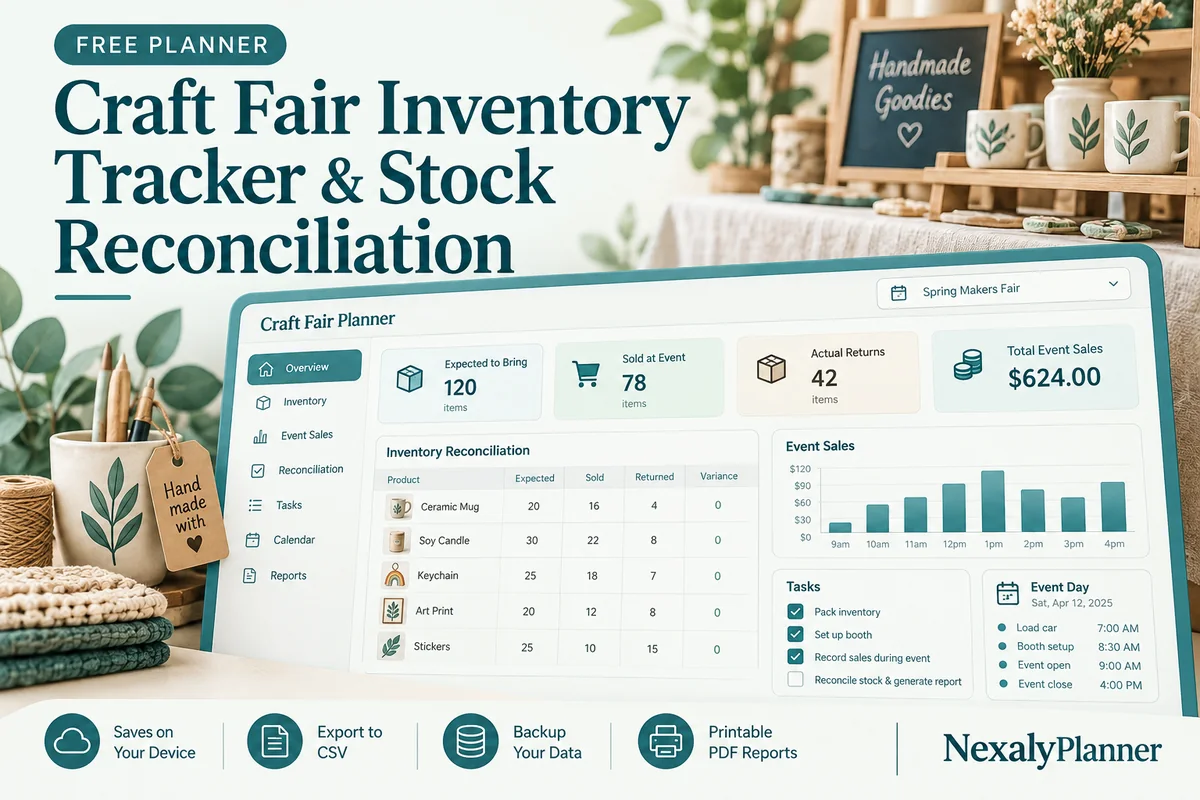
Reconcile event stock and sales. See what sold, what returned and where counts differ.

Compare landed costs, delivery and your own supplier scores for the same purchase.
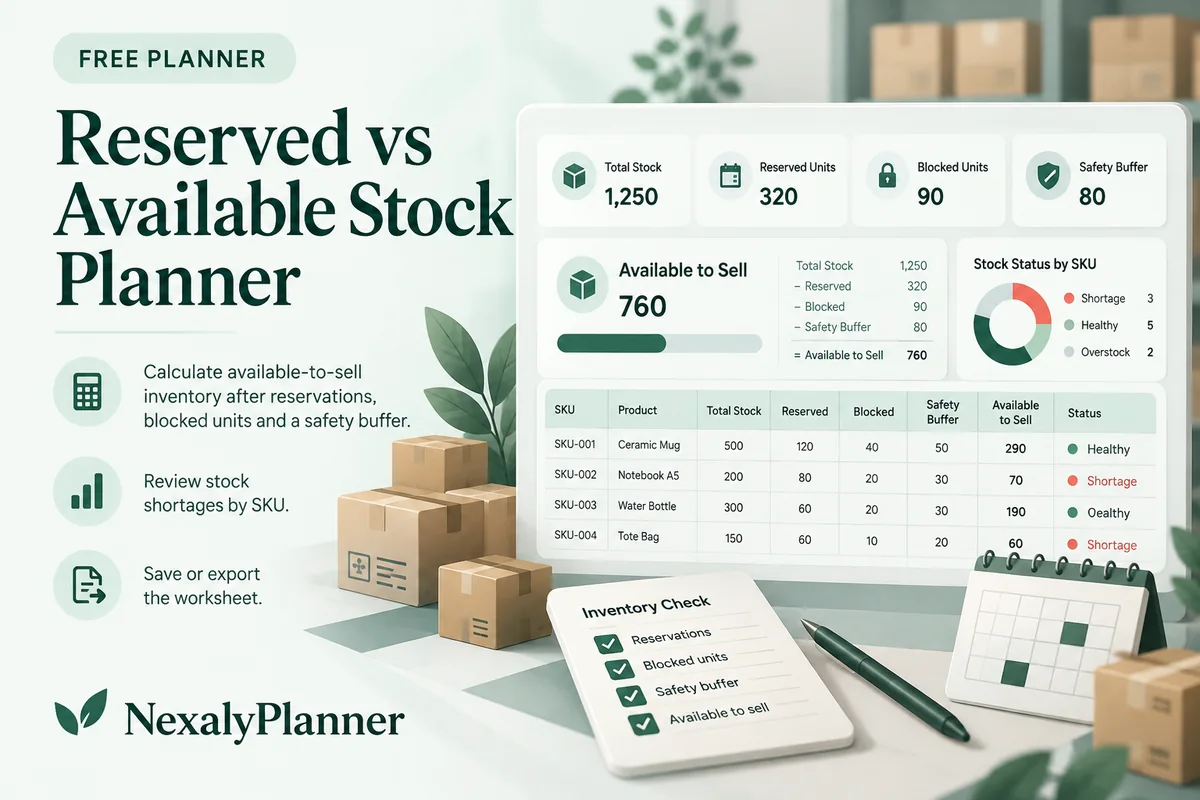
Find stock available to sell after reservations, blocked units and your safety buffer.
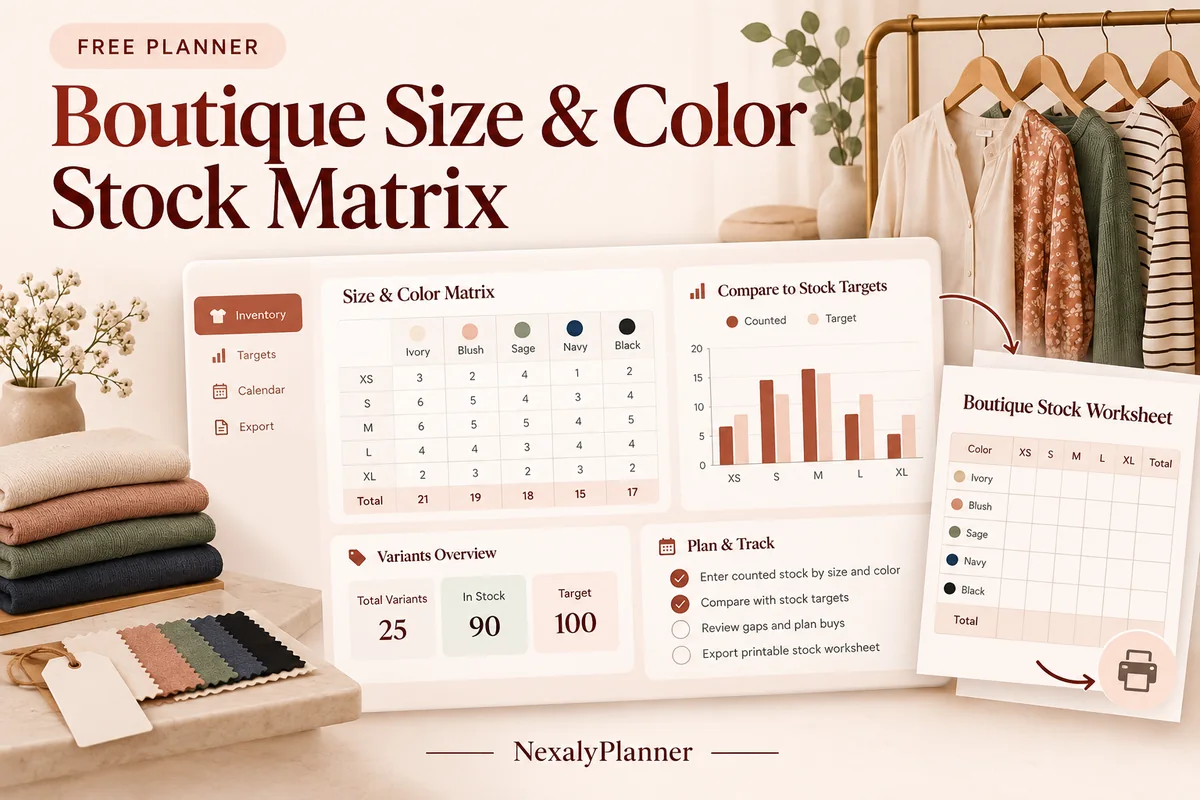
Turn counted clothing variants into a size/color matrix with separate gaps and surpluses.
Plan cash commitments, invoice follow-ups and subscription costs.
8 planners
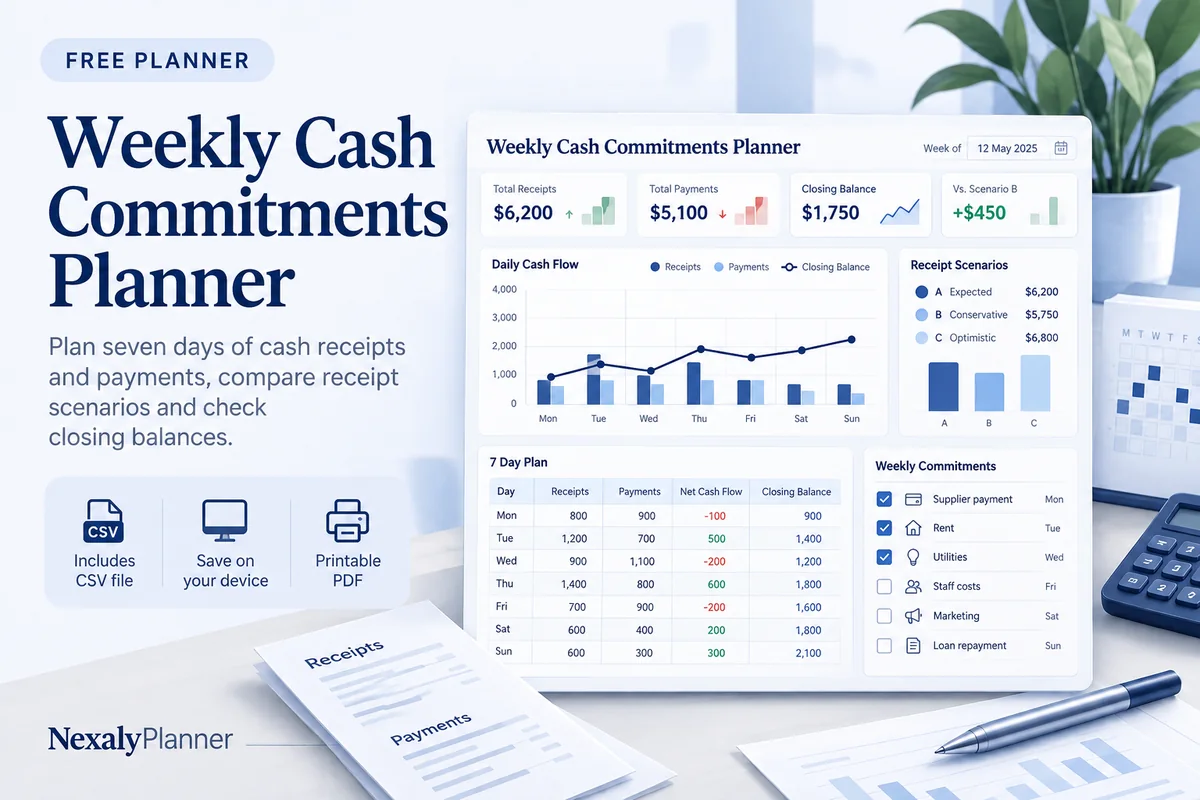
Compare the next seven days of cash commitments with planned and confirmed receipts.
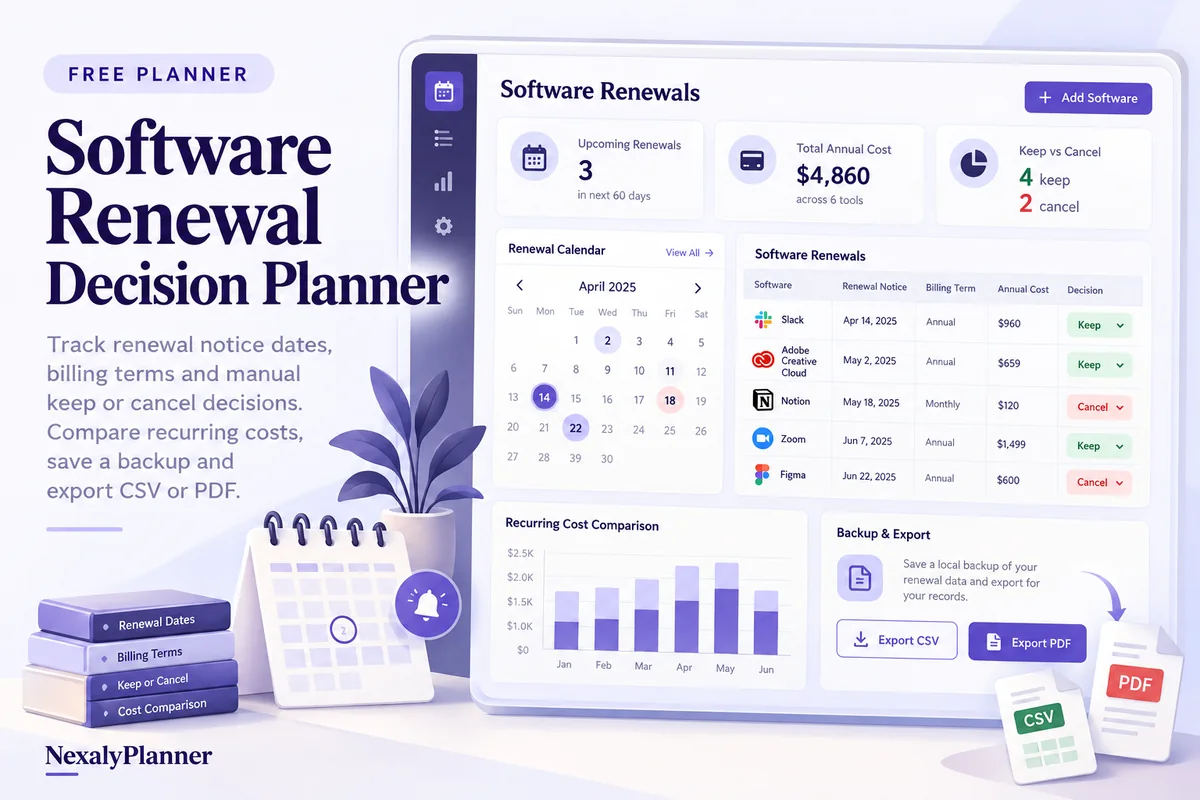
Review renewal dates, notice periods and monthly or annual cost equivalents.
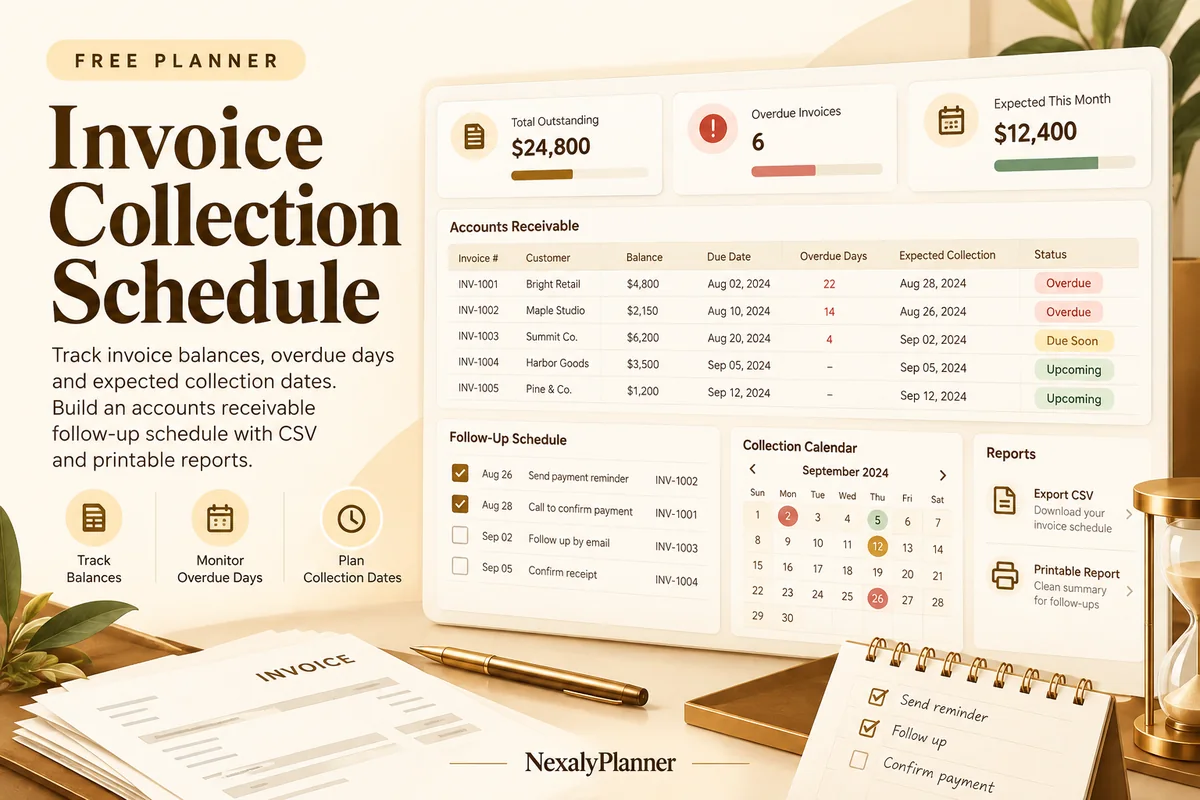
Review unpaid invoices, overdue days and your expected collection dates in one schedule.
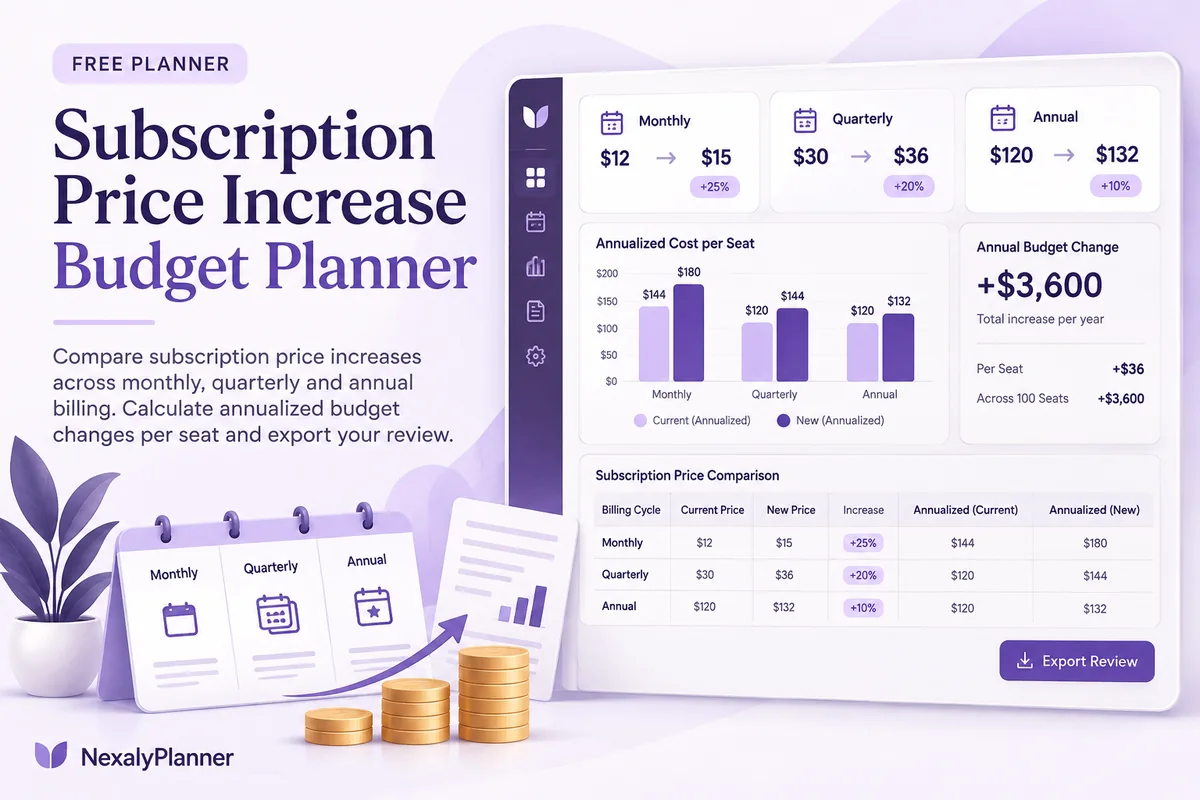
Compare subscription costs before and after a price change, across billing cycles and seats.

Compare forecast and actual cash, then separate receipt, payment and opening-balance differences.

Compare monthly budget with actual income and expenses to see which categories need review.

Model service revenue, operating costs and cash timing across two months using your own assumptions.

Schedule project payments and milestone receipts to spot cash gaps before the next collection.
Review delivery capacity, retainer hours and the cost of extra project scope.
4 planners
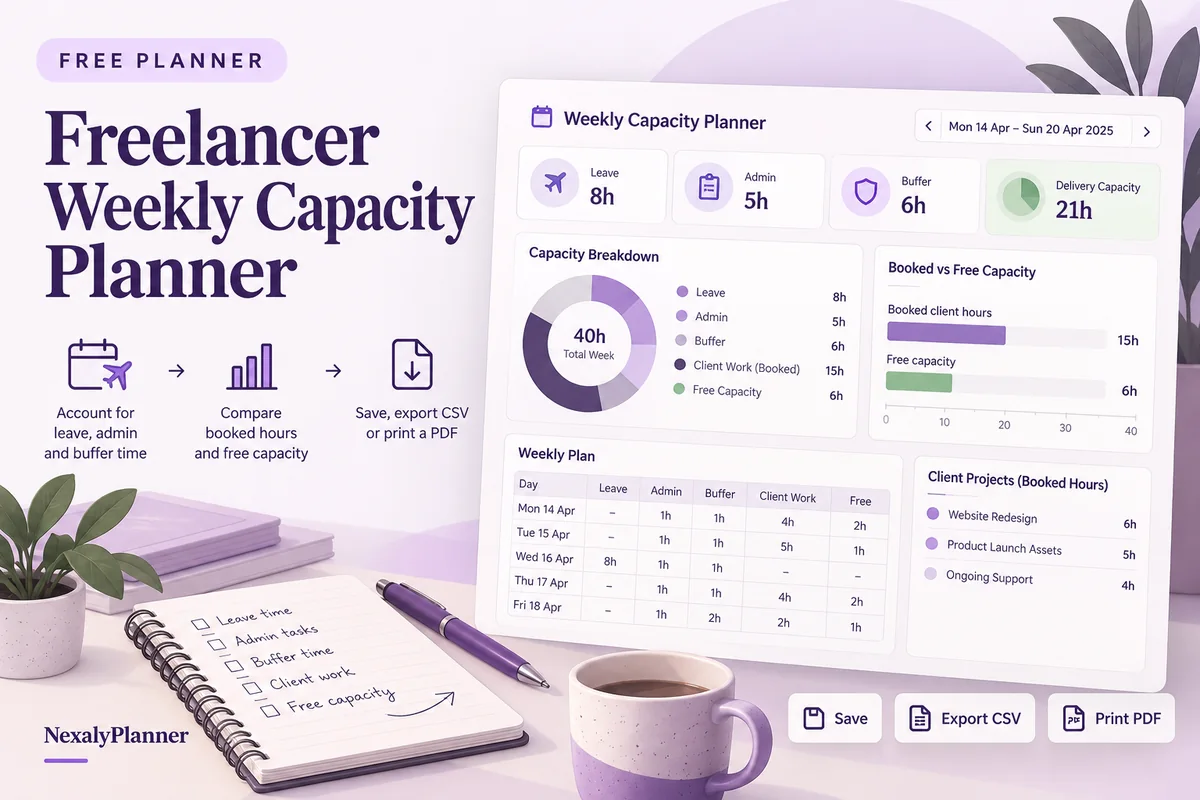
Compare booked client hours with the time left after leave, admin and buffers.
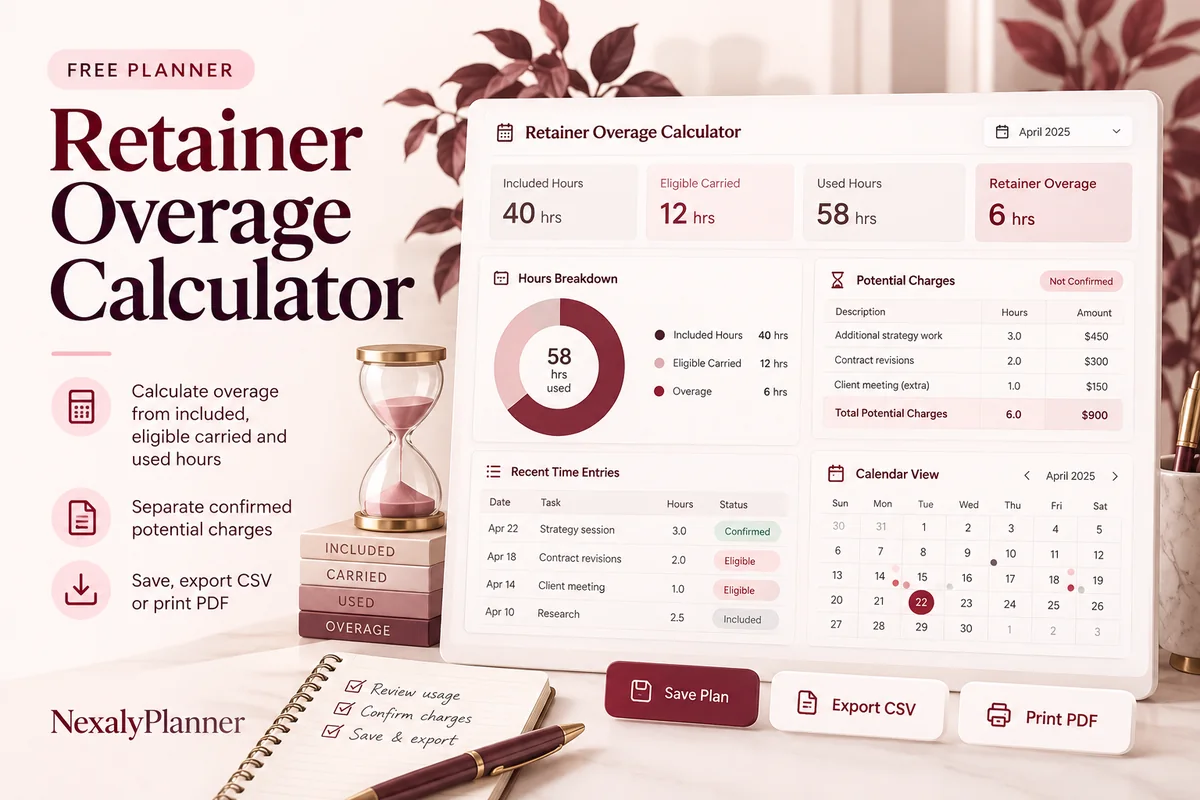
Review retainer hours and potential extra charges at the agreed overage rate.
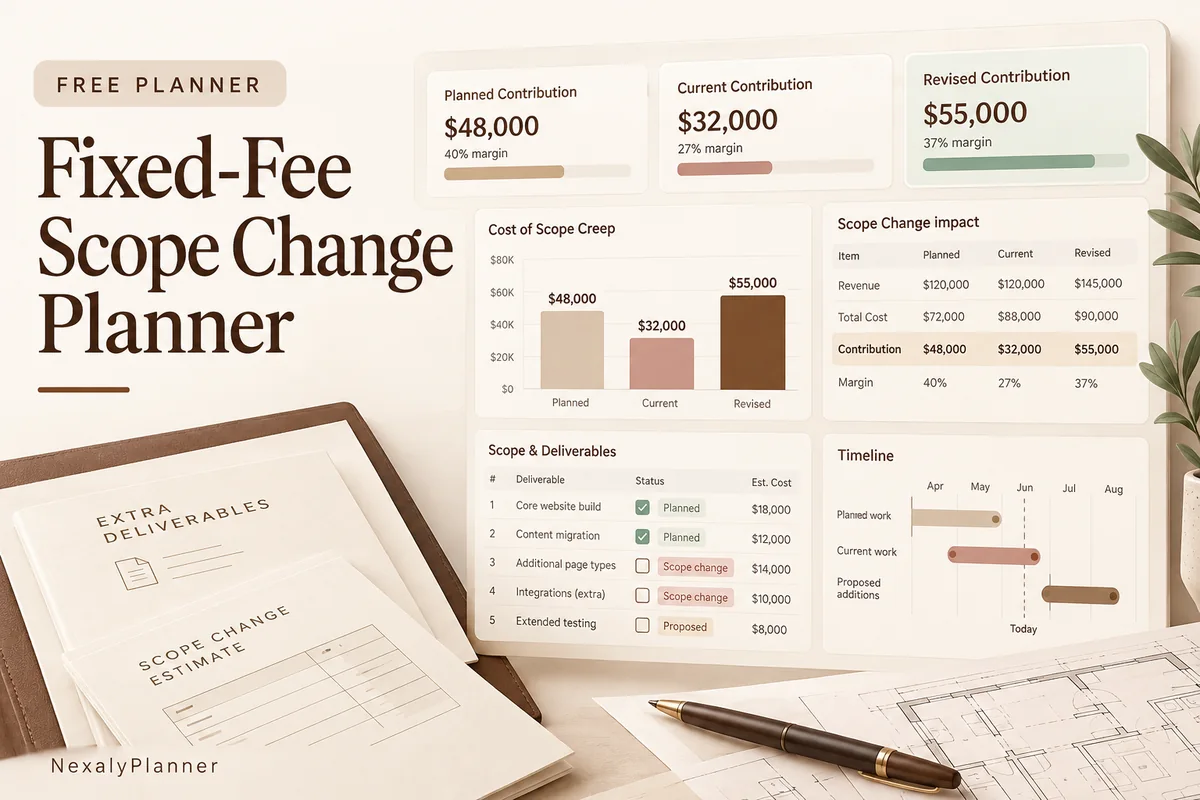
Compare planned contribution, updated base work and the cost of proposed extra scope.

Outline your customer, offer, costs and next validation steps in a printable one-page plan.
Prepare repair estimates, check service intervals and review rental capacity.
6 planners
Organize document expiry dates, renewal lead days and owners. Review overdue renewal-start dates and export a manual action calendar.
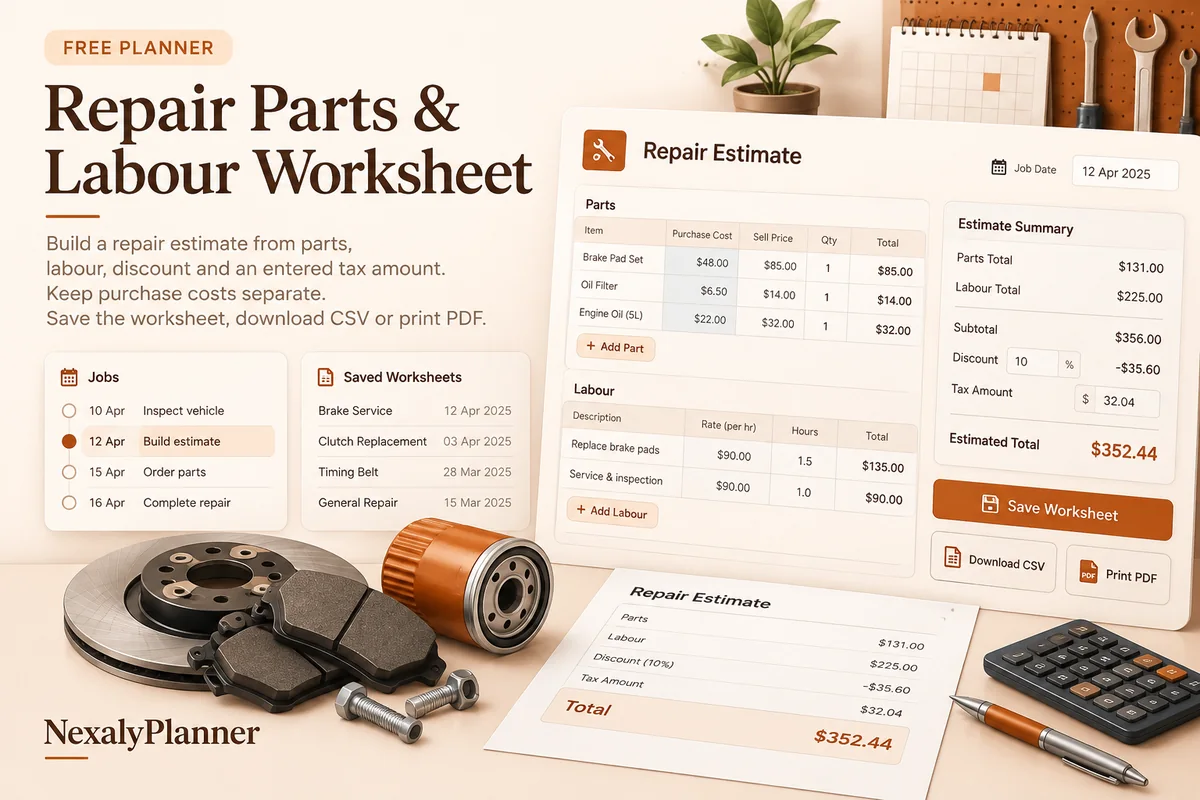
Prepare one repair estimate from parts, labour, discount and your entered tax amount.
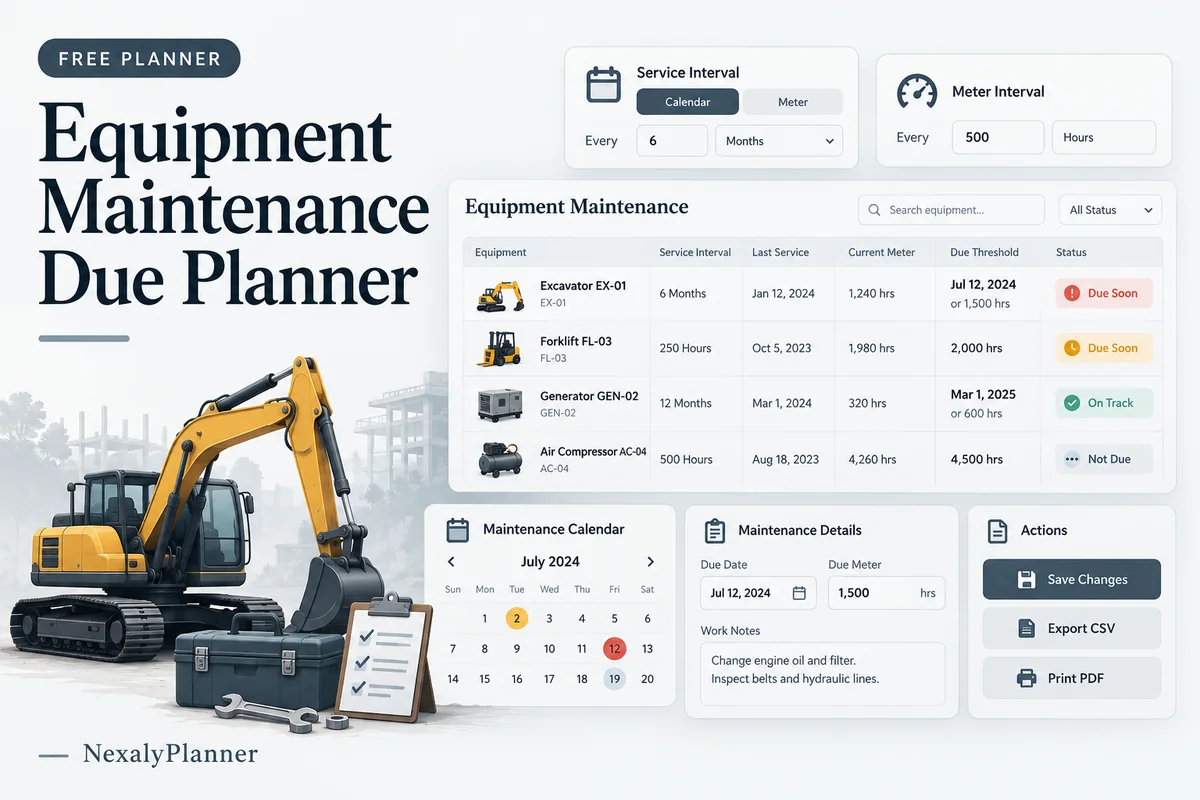
Check equipment service records against the calendar or meter-hour intervals you enter.
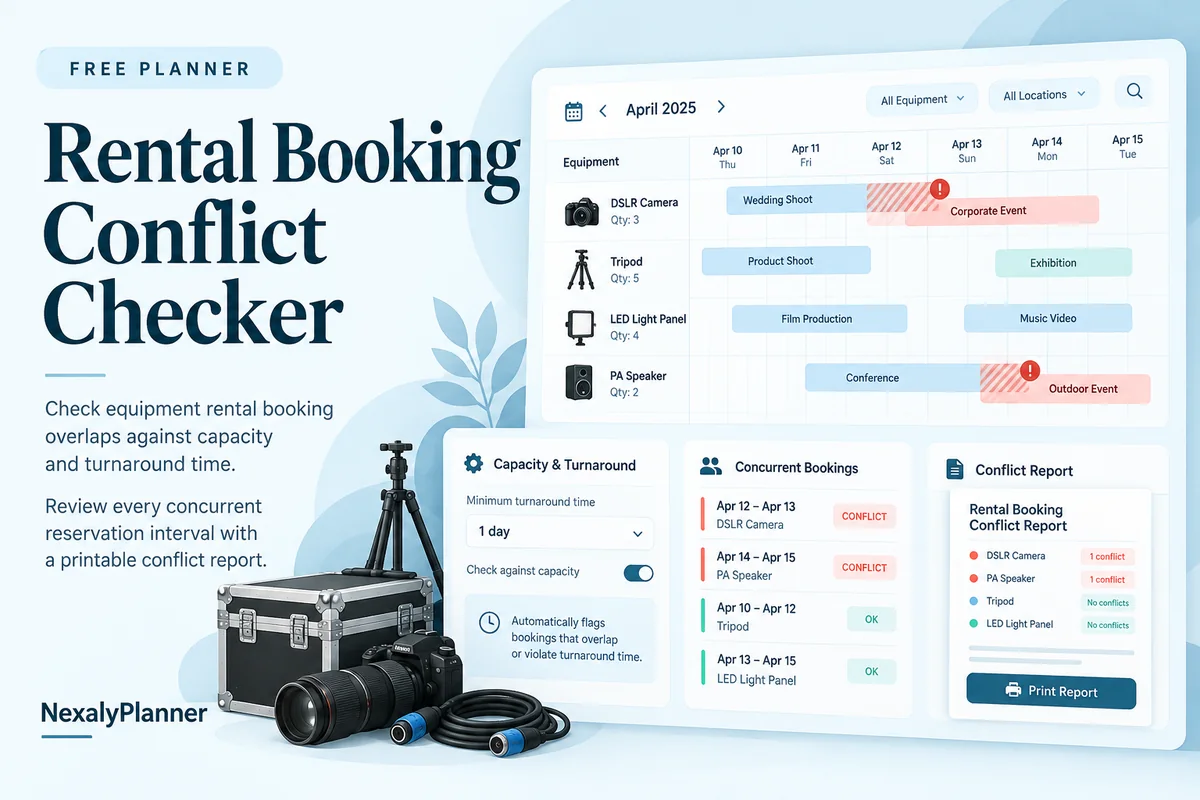
Find concurrent rental bookings that exceed equipment capacity, including turnaround time.

Compare daily orders, staffing and operating costs, then review a slower-day scenario.

Estimate trip costs using loaded and empty miles, fuel and other expenses before reviewing a quoted rate.
Plan assignment work, catch-up sessions and an on-time daily routine.
4 planners
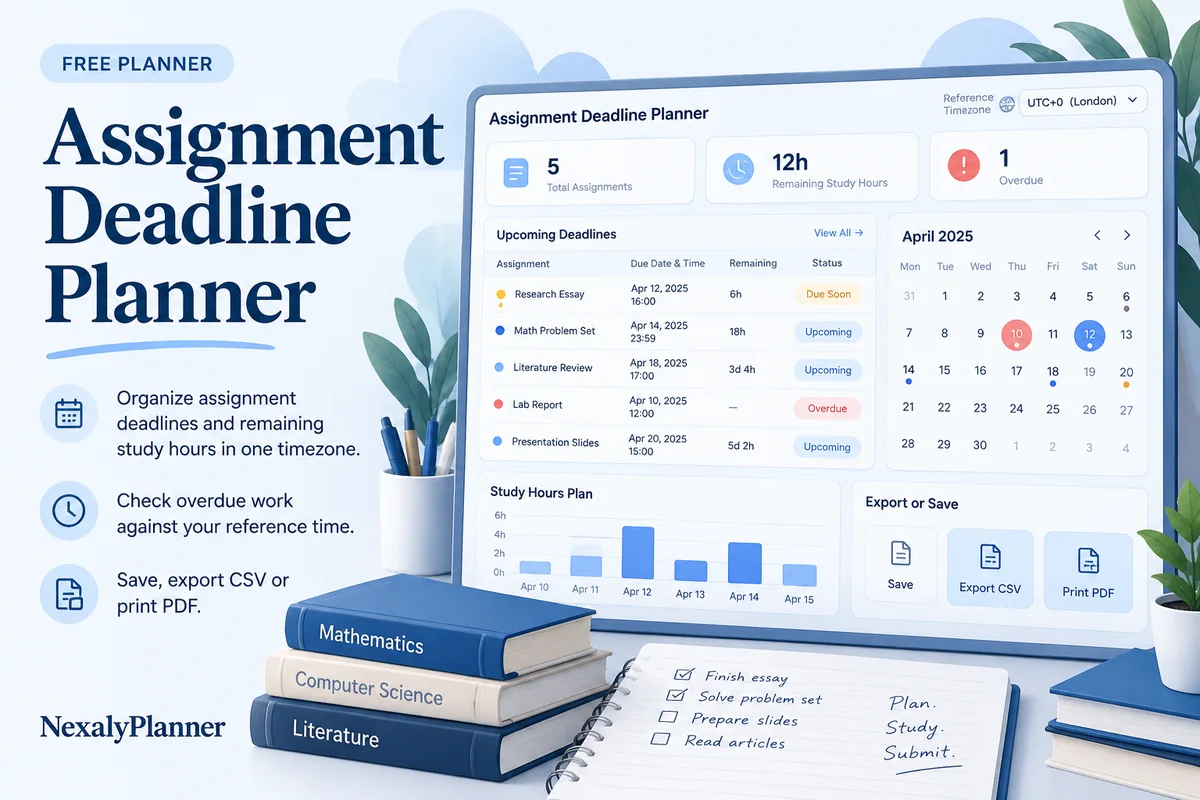
Review assignment deadlines and remaining effort against an explicit reference time.
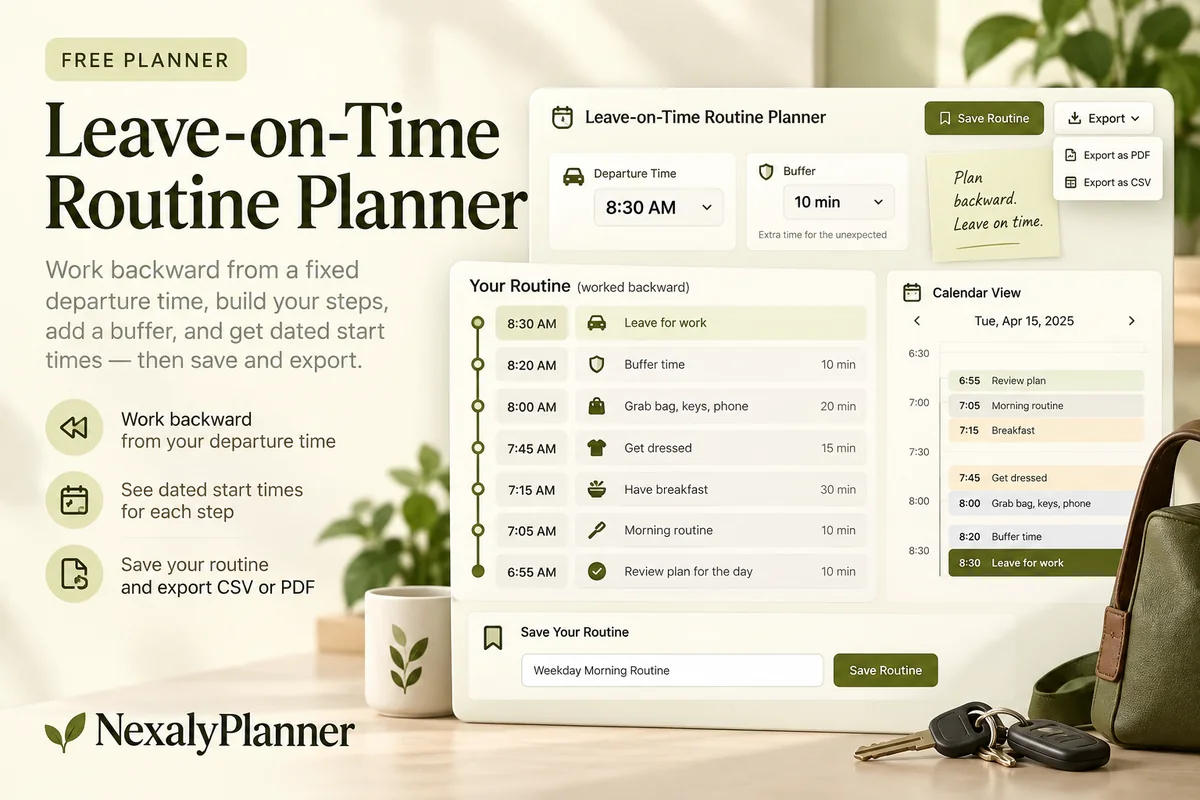
Work backward from departure time to arrange your routine and its final buffer.
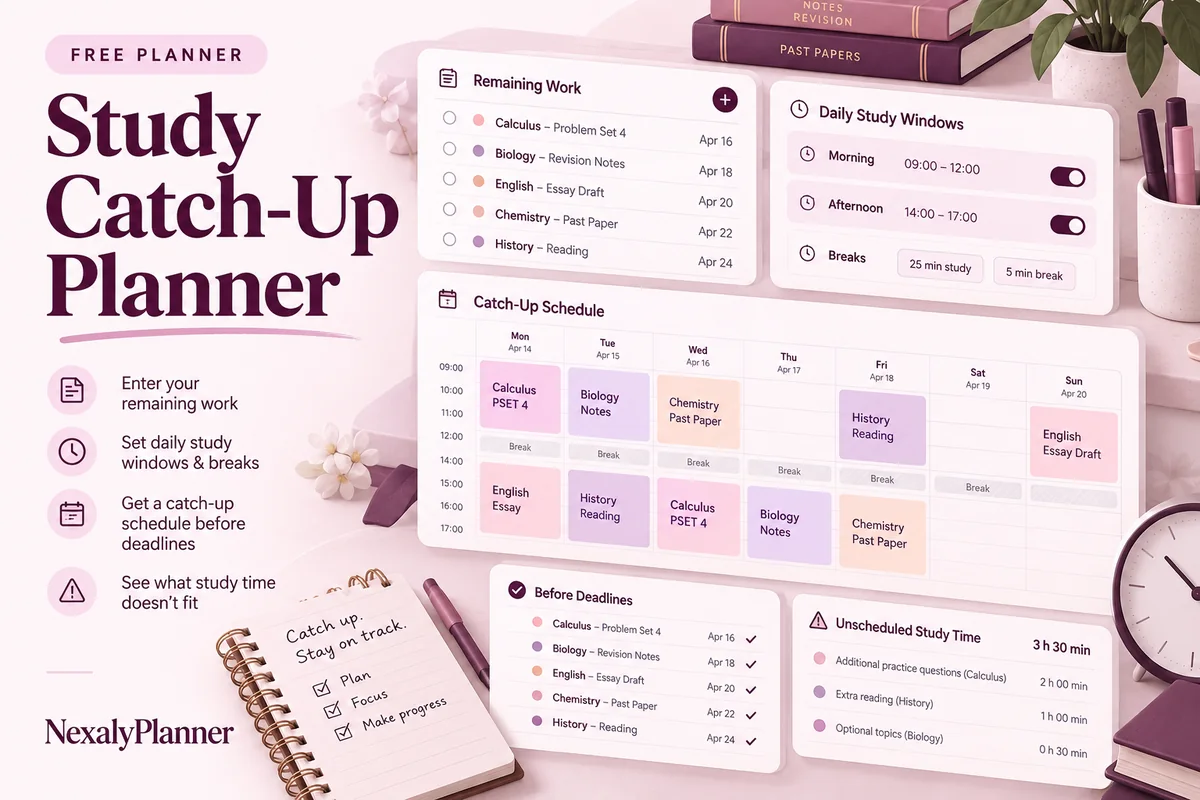
Fit remaining study work into daily windows. Keep breaks and see what cannot fit.

Create a daily or weekly planner page with your priorities and schedule, then print or save a PDF.
Organize attendance, subject hours and work-sample references.
4 planners
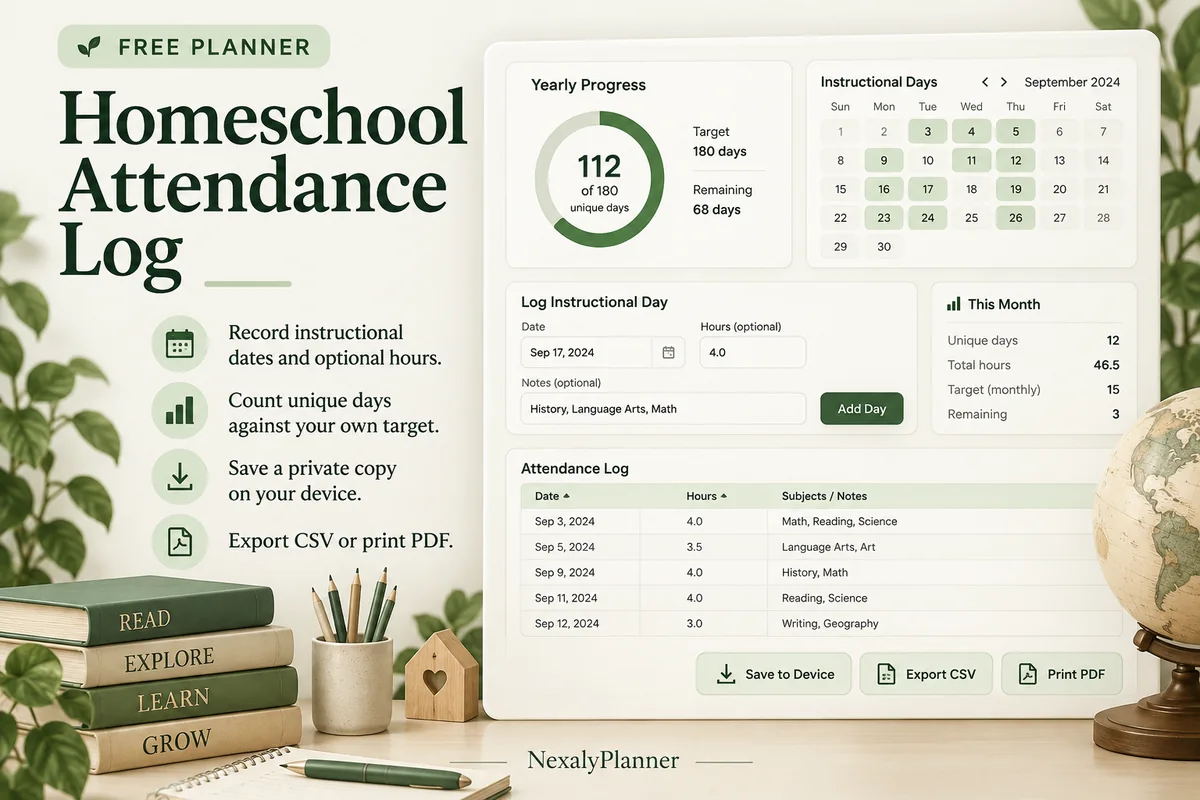
Count unique learning dates and compare attendance with your own target.
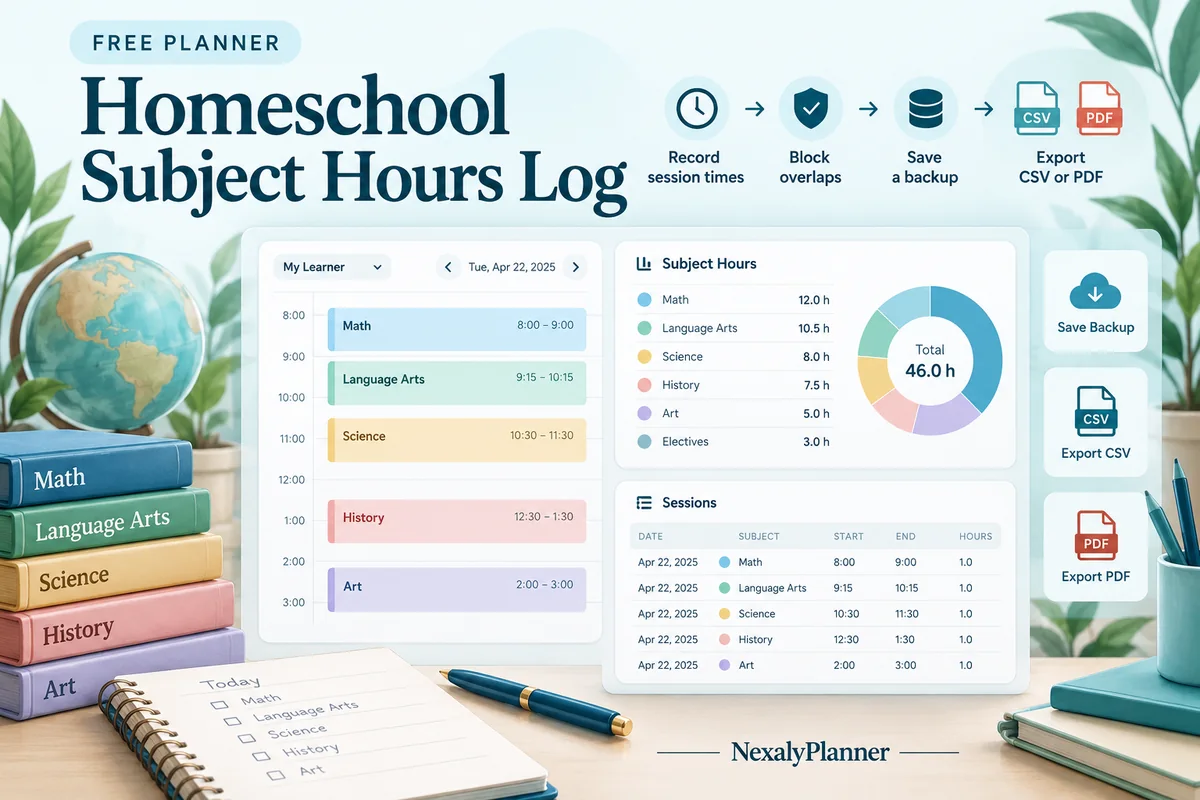
Review learning time by subject and flag sessions that overlap.
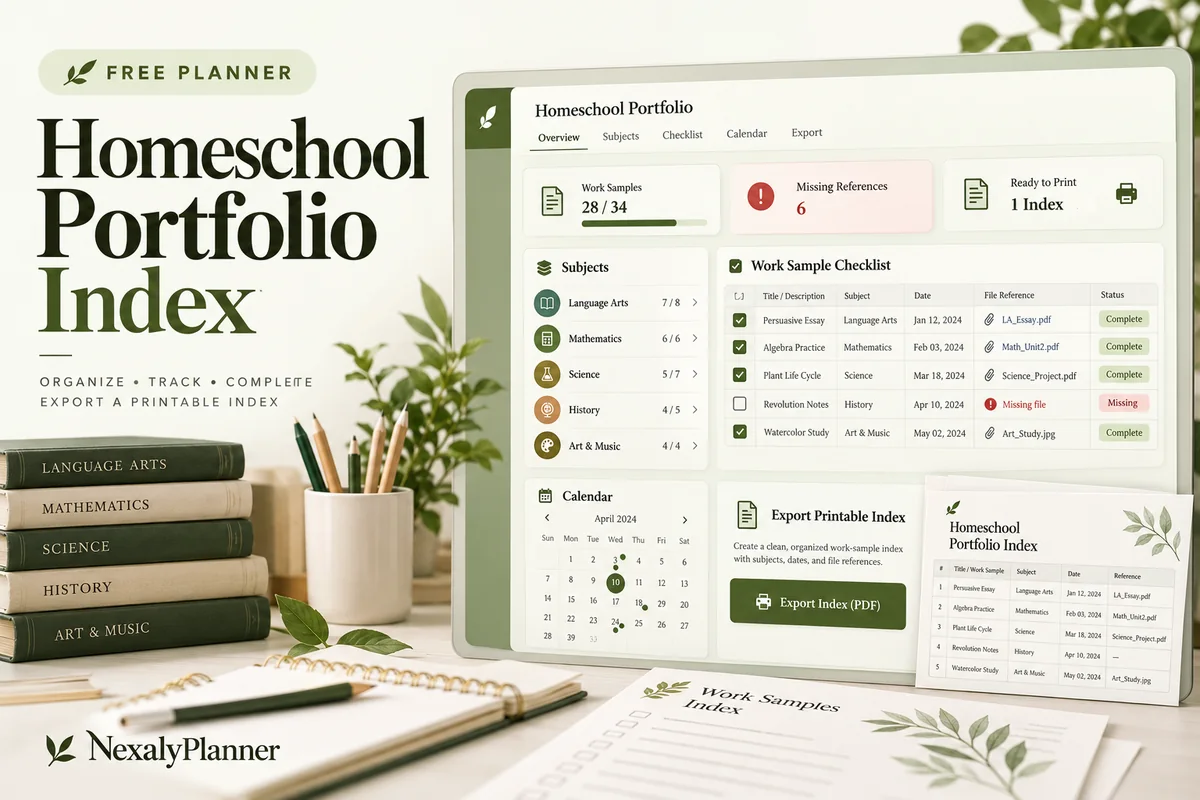
Index work samples by subject and date, then review missing file references.

Organize lessons for your selected month by date and subject, then print a teaching plan.
Coordinate visits and handoffs using the information your family enters.
2 planners
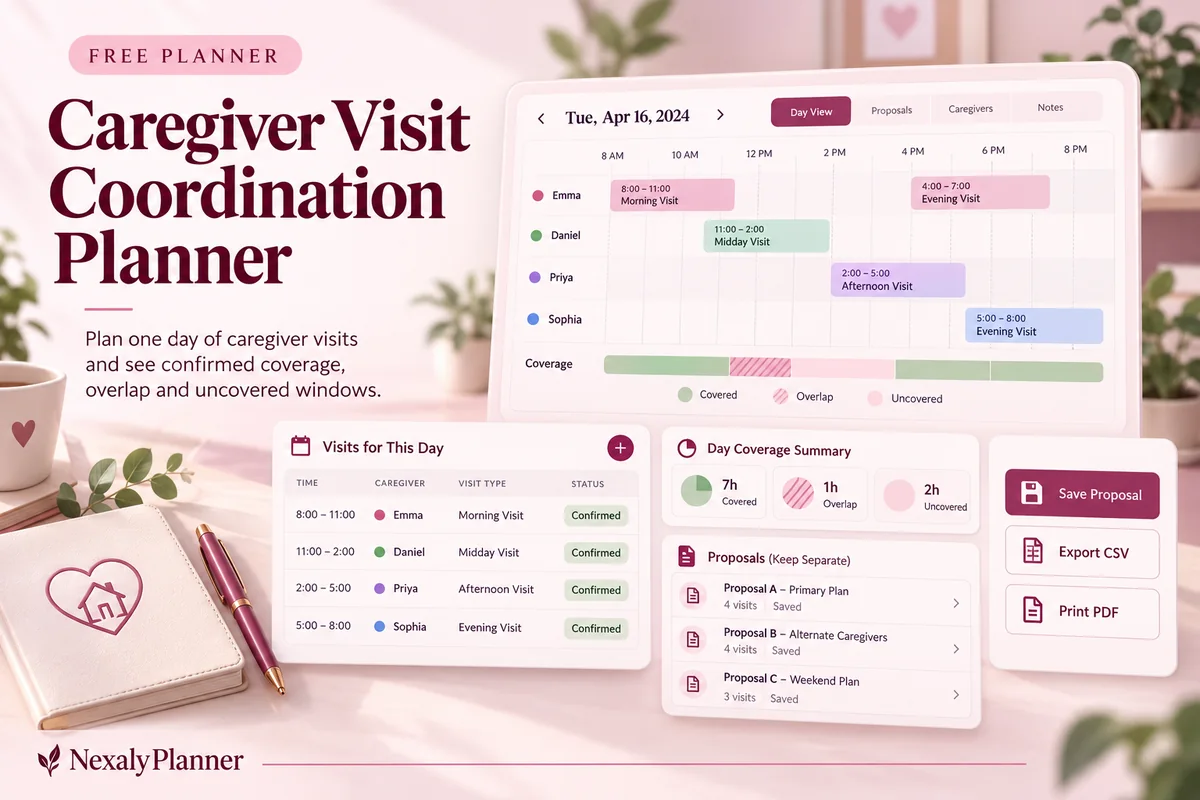
Review proposed and confirmed visits and spot gaps in an entered coverage window.

Keep completed actions and unfinished follow-ups together for the next family helper.
Turn a source idea into an editable task list, then review a publishing checklist.
4 planners
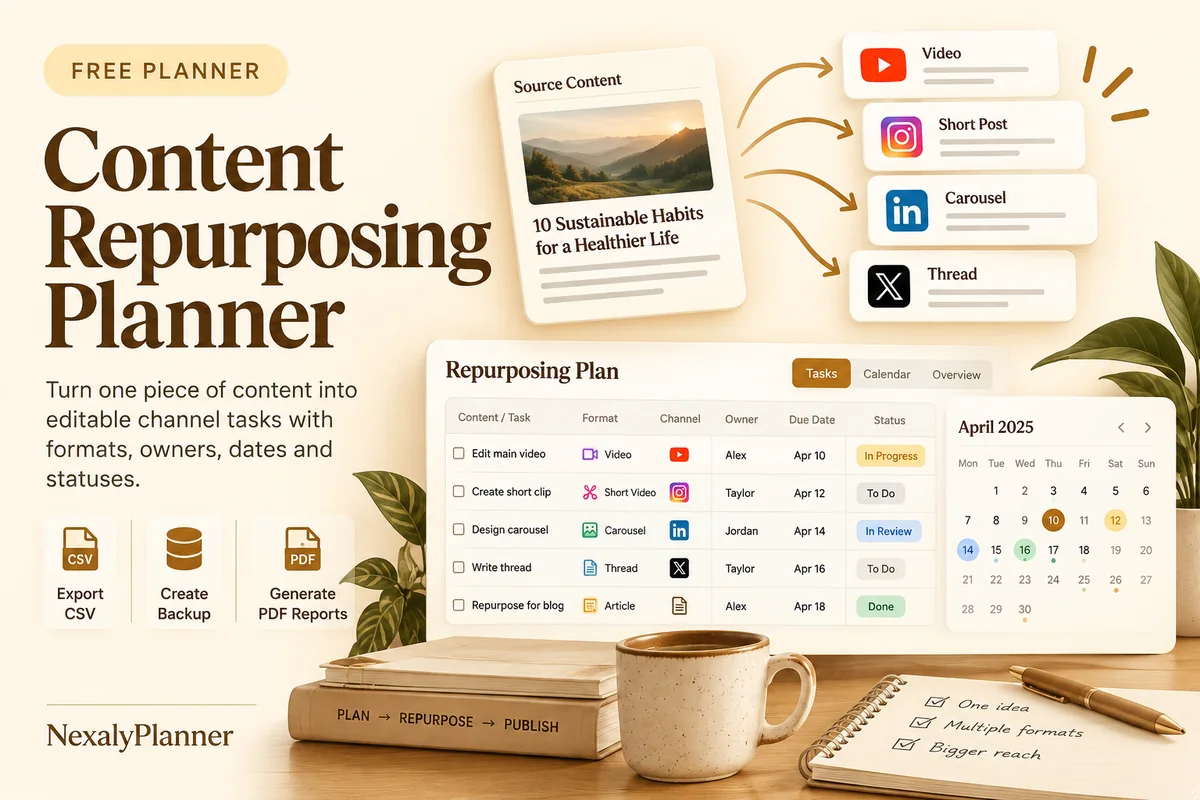
Build an editable task list from one source, with channel, owner and deadline.

Review one content asset with checks, evidence and unfinished actions before publishing.

Compare planned content-production hours with daily capacity to spot overloaded dates.

Allocate a campaign budget across channels and compare planned spending with actual costs.
Open a planner and try its labelled fictional example. The guide explains the inputs and limits.
Enter your own records, calculate, and review the result. These are manual worksheets, not connected accounts.
Choose Save on this device, or download an editable JSON backup. CSV and browser print keep reports.
Explore the full digital planners and business operating systems. Read the product guide before choosing; free worksheet backups do not import into the paid apps.